Source Invisible Metal Zipper for Garment, Bag, and Shoes
Compare 30 available options for the invisible metal zipper, featuring various slider types like auto lock and pin lock, materials including brass and nylon, and specifications ranging from 3# to 5#. Buyers can evaluate different packing details and customization options for garment, bag, and shoe applications.
Key considerations
Products List


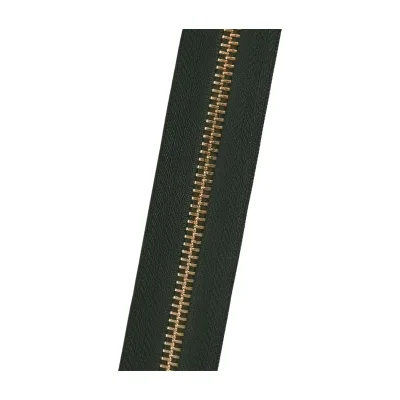
Comprehensive Sourcing Guide
Strategic Sourcing Guide for Invisible Metal Zippers
Understanding the Technical Landscape of Invisible Metal Zippers
The procurement of invisible metal zippers requires a nuanced understanding of how metal components interact with the specific engineering of invisible tape systems. Unlike standard metal zippers where teeth are exposed, invisible metal zippers utilize a specialized coil or tape structure that conceals the teeth when closed, creating a seamless aesthetic essential for high-end garments and home textiles. The supplied product data indicates a diverse range of specifications available in the market, including distinct model numbers such as 25YHQ1067, H-001/002/004/005, and Z-002. Buyers must recognize that the "invisible" designation often refers to the tape design, while the material composition can vary significantly between metal, brass, and nylon options.
The technical specifications observed in the current supply base reveal a clear segmentation by size and type. The data highlights standard sizes including 3#, 4#, and 5#, which correspond to the width of the teeth and the tape. The 3# specification is frequently cited alongside open-end and closed-end configurations, while the 5# and 4# models appear in various contexts, including invisible zipper applications. The slider mechanisms are equally critical, with the market offering both "Auto Lock" and "Pin Lock" types. The "Auto Lock" slider is noted as a "One Way" mechanism, which is a vital functional detail for applications where the zipper must not slide open under tension. Furthermore, the "Style" attribute varies between "EU & US" standards and "Common" or "Individual" designs, indicating that buyers must specify their regional requirements to ensure compatibility with existing garment patterns or machinery.
Compliance, Certification, and Material Verification
When sourcing invisible metal zippers, verifying material composition and compliance standards is paramount to ensuring product safety and durability. The provided facts confirm that the material spectrum includes Brass, Nylon, and general Metal classifications. Brass is explicitly mentioned as a primary material, suggesting a preference for corrosion resistance and a premium feel in certain applications. However, the presence of "Nylon" and "Metal" as distinct categories indicates that buyers must explicitly define their material requirements, as the performance characteristics of a metal tooth versus a nylon coil differ significantly in terms of flexibility and strength.
Regarding compliance, the supplied data lists "SGS" as a specific product standard, which serves as a tangible verification point for quality assurance. While background knowledge often references standards like OEKO-TEX or REACH, these are categorized as low-confidence background information in the current dataset and should not be asserted as guaranteed attributes for every listed product. Instead, procurement teams should treat the mention of SGS as a specific capability of certain suppliers within the market. Buyers must actively request certification documentation for chemical safety and material composition, particularly for garments intended for children or direct skin contact. The "High Quality: Factory Directly" attribute suggests a supply chain structure that may reduce intermediate markups, but it does not inherently guarantee compliance with international safety standards without specific verification.
Cost Drivers and Pricing Dynamics
The economic landscape for invisible metal zippers is influenced by a complex interplay of material costs, customization requirements, and order volume. The observed listed price range in the market spans from $0.02 to $0.80 USD per unit. This wide variance is likely driven by the specific model number, the material composition (e.g., brass vs. standard metal), and the level of customization involved. For instance, the "Metal Zipper" keyword combined with "24 Colors Available" suggests that color customization is a significant cost driver. Customizing the tape color or the slider finish to match specific brand requirements often incurs additional tooling or setup fees, which can push the unit price toward the higher end of the observed range.
Minimum Order Quantity (MOQ) is another critical factor affecting the total cost of ownership. The data reveals an MOQ range from 100 to 1,000,000 units. This broad spectrum indicates that the market accommodates both small-batch prototyping and large-scale industrial production. Suppliers offering an MOQ of 500 PCS, as noted in the specific product facts, provide a viable entry point for smaller brands or sample orders. However, buyers should be aware that lower MOQs often come with a higher per-unit cost. Conversely, orders approaching the million-unit threshold may benefit from economies of scale but require significant capital commitment and precise demand forecasting. The "Payment Term: T/T" (Telegraphic Transfer) is the standard method mentioned, which is typical for B2B transactions but requires careful management of cash flow, especially when dealing with high-volume orders.
Typical Applications and Functional Requirements
The versatility of invisible metal zippers is evident in the diverse usage categories listed in the product data. The primary applications include Bag, Garment, Shoes, and Home Textile. The "Bag" and "Garment" categories are the most prominent, reflecting the aesthetic demand for concealed fastening in fashion design. In the garment sector, the "Invisible Zipper" attribute is specifically linked to polyester materials, suggesting a common pairing of polyester tape with metal teeth for durability and smooth operation. The "Home Textile" application expands the utility to items like curtains, cushions, and bedding, where the "Open-end" and "Closed-end" specifications become relevant.
The functional requirements vary by application. For shoes and bags, the "Strength: 60kg" attribute provides a concrete benchmark for durability, indicating that certain models can withstand significant tensile force. This is crucial for luggage or heavy-duty bags where zipper failure would be catastrophic. For garments, the "Slider Type" becomes the primary functional consideration. The "One Way" Auto Lock slider is ideal for back zippers in dresses or skirts where the zipper should not slide down accidentally. In contrast, "Pin Lock" sliders might be preferred for jackets or bags where the slider needs to be secured in place but not necessarily locked in a single direction. The "Style: EU & US" specification further implies that the zipper design must align with regional sizing and aesthetic preferences, which is a critical factor for international export markets.
Supplier Evaluation and Sourcing Strategy
Evaluating suppliers for invisible metal zippers requires a rigorous assessment of their capabilities against the specific technical and logistical requirements of the buyer. The data indicates that suppliers are located primarily in Ningbo, China, and Zhejiang, China. These regions are established manufacturing hubs for textile accessories, offering a concentration of expertise and supply chain infrastructure. However, the presence of multiple model numbers and varying specifications suggests that not all suppliers offer the full range of products. Buyers should verify if a specific supplier can provide the exact model number required, such as 25YHQ1067 or Z-002, rather than assuming a generic "invisible metal zipper" will suffice.
Customization is a key differentiator in supplier selection. The "Customization: Available" attribute is a high-confidence fact, meaning that suppliers are generally willing to accommodate specific requests. This includes the "Logo: as Your Request" and "Slider: Your Desin Is Acceptable" options, which allow brands to create unique product identities. However, buyers must clarify the extent of these customizations. Does "Your Design" refer to the slider shape, the puller logo, or the tape color? The "Sample: Free" attribute is a valuable tool for initial supplier evaluation, allowing buyers to test the physical quality of the zipper before committing to a large order. Additionally, the "Packing Detail" varies, with options ranging from 100PCS/Bag to 50PCS/Bags, and carton counts differing between 20, 25, and 2500 units. Buyers must ensure that the supplier's packaging aligns with their logistics capabilities and storage constraints.
Quality Control and Long-Term Procurement Considerations
Maintaining consistent quality in invisible metal zipper procurement requires a robust quality control (QC) framework. The "Strength: 60kg" and "Standard: 20cm" or "25cm" specifications provide measurable criteria for acceptance. Buyers should implement a QC protocol that includes visual inspection for tape uniformity, slider functionality testing (ensuring the "One Way" lock engages correctly), and tensile strength verification. The "Product Type: Zippers" is a broad category, so specific testing for the "Invisible" feature is necessary to ensure the teeth remain concealed when closed. The "Packing: OPP Bag" and "100PCS/Bag" details suggest that individual bagging is common, which helps protect the zippers from damage during transit but requires careful handling to prevent tape deformation.
Long-term procurement considerations involve building a sustainable supply relationship. The "Factory Directly" attribute suggests that working directly with the manufacturer can reduce lead times and improve communication. However, buyers must also consider the "Lead Time" and "Location" factors. With origins in Ningbo and Zhejiang, shipping times to global markets must be factored into the production schedule. The "Payment Term: T/T" is standard, but for long-term partnerships, buyers might negotiate terms that align with production milestones. Furthermore, the "Color: Any Color" and "Various Colors as Required" options indicate that color consistency is a potential risk area. Buyers should establish a color standard and require batch-to-batch consistency checks to avoid discrepancies in large production runs. Finally, the "MOQ: 500PCS" and the wide range of available sizes (#3, #4, #5) mean that buyers should plan their inventory carefully to avoid overstocking or stockouts, leveraging the flexibility of the supply base to adjust to market demand fluctuations.
Comparative Analysis of Key Specifications
To facilitate clearer decision-making, the following table summarizes the key specifications observed in the market data, highlighting the variations that buyers must navigate during the sourcing process.
| Specification Category | Observed Options | Key Considerations for Buyers |
|---|---|---|
| Material | Brass, Nylon, Metal | Verify material for corrosion resistance and weight; Brass is premium, Nylon is flexible. |
| Size/Model | 3#, 4#, 5#, 25YHQ1067, H-001/002/004/005 | Match size to garment weight; Model numbers vary by manufacturer. |
| Slider Type | Auto Lock (One Way), Pin Lock | Auto Lock prevents accidental opening; Pin Lock offers different security levels. |
| End Type | Open-end, Closed-end | Open-end for jackets/bags; Closed-end for pants/dresses. |
| Color | Any Color, 24 Colors Available, Various Colors | Confirm color matching capabilities and MOQ for custom colors. |
| Packing | 100PCS/Bag, 50PCS/Bags, 20/25/2500/CTN | Align packing with storage and automation needs. |
| Origin | Ningbo, Zhejiang (China) | Verify specific factory location for logistics planning. |
| Strength | 60kg (Specific Model) | Ensure strength meets application requirements (e.g., heavy bags). |
| Customization | Logo, Slider Design, Color | Clarify scope of customization and associated costs. |
This comparative analysis underscores the importance of precise specification in the sourcing process. The diversity of options, while beneficial, requires buyers to be meticulous in their requirements to ensure the final product meets the intended functional and aesthetic standards. By focusing on these verified attributes and avoiding assumptions about unverified certifications or performance metrics, procurement teams can build a reliable supply chain for invisible metal zippers that supports their specific product needs.
FAQs
What materials are used for invisible metal zippers?
Invisible metal zippers are primarily manufactured using brass, nylon, or general metal components. Buyers must specify their preferred material as brass offers corrosion resistance while nylon provides flexibility for different garment applications.
Which slider types are available for these zippers?
The market offers Auto Lock and Pin Lock slider types for invisible metal zippers. The Auto Lock variant is typically a one-way mechanism, ensuring the zipper does not slide open under tension during use.
Can I customize the color and logo on the zipper?
Yes, customization is available for color and logo requirements on these products. Buyers can request any color or specific logo designs, though additional tooling fees may apply for custom slider designs or tape colors.
What are the standard specifications for size and strength?
Standard specifications include sizes 3#, 4#, and 5# with a tensile strength of 60kg for certain models. These sizes correspond to the width of the teeth and tape, suitable for bags, garments, and shoes.
How does the MOQ affect the pricing of these zippers?
Minimum Order Quantities range from 100 to 1,000,000 units, directly influencing the unit price. Lower MOQs like 500 pieces often result in higher per-unit costs compared to large-scale industrial production orders.
Where are the manufacturers of these zippers located?
Manufacturers are primarily located in Ningbo and Zhejiang, China. These regions are established hubs for textile accessories, offering a concentration of expertise and supply chain infrastructure for global buyers.